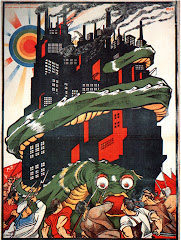
Two different views of Obama; two different views of what socialism is.
Two different views of "class" and "class struggle."
Two different views on "working class power."
Two different views of history.
Two similar views on the struggle for peace and reforms.
Howard Zinn and Michael Parenti.
A public debate across the country on these two views would serve the left and working class movement well.
Alan L. Maki
http://www.dissiden tvoice.org/ 2008/12/% e2%80%9cclass- is-a-dirty- word%e2%80% 9d/
“Class is a Dirty Word”
by Jason Miller / December 26th, 2008
Class is a dirty word in that it gets close to the truth about who governs and for whose benefit.
– Michael Parenti

Michael Parenti is an internationally known award-winning author and lecturer. He is one of the nation’s leading progressive political analysts. His highly informative and entertaining books and talks have reached a wide range of audiences in North America and abroad.
In the land of those who think they’re free and the home of savage capitalism, class is indeed a dirty word. Remember, we’re a nation of Joe the Plumbers. If we just work hard enough and fend off those socialist vampires who want to suck us dry by redistributing our hard-earned wealth, we can all be financial successes. And if you’re a faux-progressive presidential candidate—like Obama, you’re doomed to political perdition unless you sign a blood oath disavowing your ties to socialism.
Yet there are a few political analysts and academics who dare to blaspheme against capitalism, which is the “God” this benighted land truly worships—despite the disgustingly hypocritical veneer of faux Christianity. Remember that Michael Parenti has one of the filthiest mouths you’ll ever hear. He dares to repeatedly spew profane diatribes against capitalism, the sacrosanct basis for our precious American Way of Life. Parenti has the chutzpah to derisively attack our system, which we all know is the best that’s ever been (or will be), by asserting that there are divisions amongst US Americans based on socioeconomic standing. And worst of all? He uses the “C” word! Somebody needs to give his mouth a good cleansing with a bar of Dial!
Parenti recently answered a few questions Jason Miller threw his way. Let’s see how much further he traveled on the road to perdition…
Jason Miller: You’re one of the best kept secrets of the “American Left” (ridiculously marginalized and small in number as we are). Why is it that despite your brilliant critiques, particularly of bourgeois revisionist history, you remain relatively obscure even amongst the more radical segment of the US population?
Michael Parenti: It’s really not all that bad. People do describe me as “widely acclaimed” and “internationally known” etc. and I do reach varied audiences in North America and abroad with my writings, lectures, and interviews. But it is true that there are sectarian or small minded elements on the left – including some very prominent figures – who are quiet practitioners of McCarthyism in that they exclude or try to isolate anyone who (a) places a strong emphasis on the realities of class power (b) occasionally uses a Marxist analysis or (c) finds some things of value in existing socialist societies that are worthy of being preserved, such as human services, guaranteed right to a job, free education, free medical care, affordable housing for all, etc. These societies, now mostly defunct, have been deemed by most of the left as worthy of nothing but a constant unremitting denunciation.
JM: Do you think the bourgeoisie has begun demonizing environmentalists and animal rights advocates because they perceive us to be a legitimate threat to the system, is the Green Scare simply another aspect of the divide and conquer tactic, do animal and Earth exploiters wield that much power within the system, is it a combination of these, or something more?
MP: The purveyors of free-market global capitalism believe that they have a right to plunder the remaining natural resources of this planet as they choose. Anyone who challenges their agenda is to be subjected to whatever misrepresentation and calumny that serves the free market corporate agenda.
JM: How has the capitalist class in the US been so successful at convincing the masses that we live in a “classless society” and etching a cultural standard in granite that it is taboo to discuss class issues?
MP: Through control of the universe of discourse, including the media, the professions, the universities, the publishing industry, many of the churches, the consumer society, the job market, and even the very socialization of our children and the prefiguring of our own perceptions, the ruling interests are able to exercise a prevailing ideological control that excludes any reasoned critique of the dominant paradigm. Class is a dirty word in that it gets close to the truth about who governs and for whose benefit.
JM: What are your thoughts on Obama and what change we may see under his presidency?
MP: I greeted Obama’s electoral victory with very little enthusiasm but much relief that the lying slime-bag right-wing John McCain was defeated. I think Obama will be another Bill Clinton, perhaps not as bad. Some people see his accession to the White House as a great historic victory for African Americans and for democracy. But I am not all that impressed. When the victory is extended into social democratic policies that have a salutary effect on millions of struggling impoverished African-Americans and other working poor, then I’ll start dancing in the streets.
JM: Prior to Obama’s election, a number of radical thinkers posited that the US was in a pre-revolutionary stage. What impact do you think the Obama administration will have on the potential of consciousness, anger, and social unrest reaching critical mass amongst the working class in the US in the near future? Or better yet, are you even optimistic that the American people will catch fire and revolt against our wretchedly rapacious and imperialistic system?
MP: I do not think we are entering a pre-revolutionary stage. However political struggle can be a surprising phenomenon emerging with great democratic force and sudden movement in the most unexpected ways. We are approaching an economic crisis of momentous scope. The radical reactions may not be all that progressive and rational. The unfortunate thing about corporate capitalism is that it is often advantaged by the very wretched conditions it itself creates. I am hoping that the social groups that have been activated by Obama’s campaign will not go to sleep and will not let up the pressure for progressive change.
JM: What do you say to critics who assert that socialism is a utopian dream in the abstract and a nightmare in reality?
MP: Your question is a paraphrase of the one I posed in my book, Democracy for the Few. “Is socialism not just a dream in theory and a nightmare in practice?” In response I pointed out that the features which make life livable in capitalist society are mostly socialistic in practice, including human services, infrastructure development, environmental protections, and even many technological advances that are funded or even created by government sources.
JM: With Castro hanging in there and now Chavez, Morales, Correa, and Ortega in place, to what extent do you think socialism will continue to expand and flourish in Latin America?
MP: It is not likely that the reforms in Latin America will really lead to socialism but at least to some gains for the most desperately oppressed.
JM: Some argue that there is a “third way” that represents a better alternative to capitalism than socialism. Your thoughts?
MP: Maybe they are referring to the social democracy that is found in some Western European countries that provide decent human services and better regulation of corporate doings. But even these social democracies are under attack and face rollback. Look at what has happened to Britain.
Jason Miller is a wage slave of the American Empire who has freed himself intellectually and spiritually. He is Cyrano's Journal Online's associate editor. He welcomes constructive correspondence at JMiller@bestcyrano. org or via his blog, Thomas Paine's Corner. Read other articles by Jason, or visit Jason's website.
This article was posted on Friday, December 26th, 2008 at 8:00am and is filed under Capitalism, Interview. ShareThis
*****************************

Howard Zinn on the Amy Goodman show:
“No, I was really gratified when Obama called for “Let’s tax the
rich more, and let’s tax the poor and middle class less.” And they
said, “That’s socialism.” And I thought, “Whoa! I’m happy to hear
that. Finally, socialism is getting a good name.” You know, socialism has
been given bad names, you know, Stalin and all those socialists, so-called
socialists. They weren’t really socialist, but, you know, they called
themselves socialist. But they weren’t really, you see. And so, socialism
got a bad name. It used to have a really good name. Here in the United
States, the beginning of the twentieth century, before there was a Soviet
Union to spoil it, you see, socialism had a good name. Millions of people
in the United States read socialist newspapers. They elected socialist
members of Congress and socialist members of state legislatures. You know,
there were like fourteen socialist chapters in Oklahoma. Really. I mean,
you know, socialism—who stood for socialism? Eugene Debs, Helen Keller,
Emma Goldman, Clarence Darrow, Jack London, Upton Sinclair. Yeah, socialism
had a good name. It needs to be restored.”
January 02, 2009
Howard Zinn on “War and Social Justice”
http://www.democracynow.org/2009/1/2/placeholder_howard_zinn
Real Video Stream
http://play.rbn.com/?url=demnow/demnow/demand/2009/jan/video/dnB20090102a.
rm&proto=rtsp
Real Audio Stream
http://play.rbn.com/?url=demnow/demnow/demand/2009/jan/audio/dn20090102.ra
&proto=rtsp
Howard Zinn is one of this country’s most celebrated historians. His
classic work A People’s History of the United States changed the way we
look at history in America. First published a quarter of a century ago, the
book has sold over a million copies and is a phenomenon in the world of
publishing—selling more copies each successive year. After serving as a
bombardier in World War II, Howard Zinn went on to become a lifelong
dissident and peace activist. He was active in the civil rights movement
and many of the struggles for social justice over the past forty years. He
taught at Spelman College, the historically black college for women, and
was fired for insubordination for standing up for the students. He was
recently invited back to give the commencement address. Howard Zinn has
written numerous books and is professor emeritus at Boston University. He
recently spoke at Binghamton University a few days after the 2008
presidential election. His speech was called “War and Social Justice.”
[includes rush transcript]
AMY GOODMAN: Howard Zinn is one of this country’s most celebrated
historians. His classic work, A People’s History of the United States,
changed the way we look at history in America. First published a quarter of
a century ago, the book has sold over a million copies and is a phenomenon
in the world of publishing, selling more copies each successive year.
After serving as a bombardier pilot in World War II, Howard Zinn went on to
become a lifelong dissident and peace activist. He was active in the civil
rights movement and many of the struggles for social justice over the past
half-century. He taught at Spelman College, the historically black college
for women in Atlanta, and was fired for insubordination for standing up for
the women.
Howard Zinn has written numerous books. He’s Professor Emeritus at Boston
University. He recently spoke at Binghamton University, Upstate New York, a
few days after the 2008 presidential election. His speech was called “War
and Social Justice.”
HOWARD ZINN: Why is all the political rhetoric limited? Why is the
set of solutions given to social and economic issues so cramped and so
short of what is needed, so short of what the Universal Declaration of
Human Rights demands? And, yes, Obama, who obviously is more attuned to the
needs of people than his opponent, you know, Obama, who is more
far-sighted, more thoughtful, more imaginative, why has he been limited in
what he is saying? Why hasn’t he come out for what is called a
single-payer system in healthcare?
Why—you see, you all know what the single-payer system is. It’s a
sort of awkward term for it, maybe. It doesn’t explain what it means. But
a single-payer health system means—well, it will be sort of run like
Social Security. It’ll be a government system. It won’t depend on
intermediaries, on middle people, on insurance companies. You won’t have
to fill out forms and pay—you know, and figure out whether you have a
preexisting medical condition. You won’t have to go through that
rigamarole, that rigamarole which has kept 40 million people out of having
health insurance. No, something happens, you just go to a doctor, you go to
a hospital, you’re taken care of, period. The government will pay for it.
Yeah, the government will pay for it. That’s what governments are for.
Governments, you know—they do that for the military. Did you know
that? That’s what the military has. The military has free insurance. I
was once in the military. I got pneumonia, which is easier to get in the
military. I got pneumonia. I didn’t have to fool around with deciding
what health plan I’m in and what—you know. No, I was totally taken care
of. I didn’t have to think about money. Just—you know, there are a
million members of the armed forces who have that. But when you ask that
the government do this for everybody else, they cry, “That’s
socialism!” Well, if that’s socialism, it must mean socialism is good.
You know.
No, I was really gratified when Obama called for “Let’s tax the
rich more, and let’s tax the poor and middle class less.” And they
said, “That’s socialism.” And I thought, “Whoa! I’m happy to hear
that. Finally, socialism is getting a good name.” You know, socialism has
been given bad names, you know, Stalin and all those socialists, so-called
socialists. They weren’t really socialist, but, you know, they called
themselves socialist. But they weren’t really, you see. And so, socialism
got a bad name. It used to have a really good name. Here in the United
States, the beginning of the twentieth century, before there was a Soviet
Union to spoil it, you see, socialism had a good name. Millions of people
in the United States read socialist newspapers. They elected socialist
members of Congress and socialist members of state legislatures. You know,
there were like fourteen socialist chapters in Oklahoma. Really. I mean,
you know, socialism—who stood for socialism? Eugene Debs, Helen Keller,
Emma Goldman, Clarence Darrow, Jack London, Upton Sinclair. Yeah, socialism
had a good name. It needs to be restored.
And so—but Obama, with all of his, well, good will, intelligence,
all those qualities that he has, and so on—and, you know, you feel that
he has a certain instinct for people in trouble. But still, you know, he
wouldn’t come out for a single-payer health system, that is, for what I
would call health security, to go along with Social Security, you see,
wouldn’t come out for that; wouldn’t come out for the government
creating jobs for millions of people, because that’s what really is
needed now. You see, when people are—the newspapers this morning report
highest unemployment in decades, right? The government needs to create
jobs. Private enterprise is not going to create jobs. Private enterprise
fails, the so-called free market system fails, fails again and again. When
the Depression hit in the 1930s, Roosevelt and the New Deal created jobs
for millions of people. And, oh, there were people on the—you know, out
there on the fringe who yelled “Socialism!” Didn’t matter. People
needed it. If people need something badly, and somebody does something for
them, you can throw all the names you want at them, it won’t matter, you
see? But that was needed in this campaign. Yes.
Instead of Obama and McCain joining together—I know some of you may
be annoyed that I’m being critical of Obama, but that’s my job. You
know, I like him. I’m for him. I want him to do well. I’m happy he won.
I’m delighted he won. But I’m a citizen. I have to speak my mind. OK?
Yeah. And, you know—but when I saw Obama and McCain sort of both together
supporting the $700 billion bailout, I thought, “Uh-oh. No, no. Please
don’t do that. Please, Obama, step aside from that. Do what—I’m sure
something in your instincts must tell you that there’s something wrong
with giving $700 billion to the same financial institutions which ruined
us, which got us into this mess, something wrong with that, you see.” And
it’s not even politically viable. That is, you can’t even say, “Oh,
I’m doing it because people will then vote for me.” No. It was very
obvious when the $700 billion bailout was announced that the majority of
people in the country were opposed to it. Instinctively, they said,
“Something is wrong with this. Why give it to them? We need it.”
That’s when the government—you know, Obama should have been
saying, “No, let’s take that $700 billion, let’s give it to people
who can’t pay their mortgages. Let’s create jobs, you know.” You
know, instead of pouring $700 billion into the top and hoping that it will
trickle down to the bottom, no, go right to the bottom, where people need
it and get—so, yes, that was a disappointment. So, yeah, I’m trying to
indicate what we’ll have to do now and to fulfill what Obama himself has
promised: change, real change. You can’t have—you can say “change,”
but if you keep doing the old policies, it’s not change, right?
So what stands in the way of Obama and the Democratic Party, and what
stands in the way of them really going all out for a social and economic
program that will fulfill the promise of the Universal Declaration of Human
Rights? Well, I can think of two things that stand in the way. Maybe there
are more, but I can only think of two things at a time. And, well, one of
them is simply the great, powerful economic interests that don’t want
real economic change. Really, they don’t. The powerful—I mean, you take
in healthcare, there are powerful interests involved in the present
healthcare system. People are making lots of money from the healthcare
system as it is, making so much money, and that’s why the costs of the
healthcare system in the United States are double what the healthcare costs
are—the percentage, you know, of money devoted to healthcare—percentage
is double, administrative costs in the United States, compared to countries
that have the single-payer system, because there are people there who are
siphoning off this money, who are making money. You know, they’re health
plans. They’re insurance companies. They’re health executives and CEOs,
so that there are—yeah, there are interests, economic interests that are
in the way of real economic change.
And Obama so far has not challenged those economic interests.
Roosevelt did challenge those economic interests, boldly, right frontally.
He called them economic royalists. He wasn’t worried that people would
say, “Oh, you’re appealing to class conflict,” you know, the kind of
thing they pull out all the time, as if there isn’t, hasn’t always been
class conflict, just something new, you know. Class conflict. “You’re
creating class conflict. We’ve never had class conflict. We’ve always
all been one happy family.” You know, no. And so, yeah, there are these
interests standing in the way, and, you know, unfortunately, the Democratic
Party is tied to many of those interests. Democratic Party is, you know,
tied to a lot of corporate interests. I mean, look at the people on
Obama’s—the people who are on Obama’s economics team, and they’re
Goldman Sachs people, and they’re former—you know, people like that,
you know? That’s not—they don’t represent change. They represent the
old-style Democratic stay-put leadership that’s not good.
So, the other factor that stands in the way of a real bold economic
and social program is the war. The war, the thing that has, you know, a
$600 billion military budget. Now, how can you call for the government to
take over the healthcare system? How can you call for the government to
give jobs to millions of people? How can you do all that? How can you offer
free education, free higher education, which is what we should have really?
We should have free higher education. Or how can you—you know. No, you
know, how can you double teachers’ salaries? How can you do all these
things, which will do away with poverty in the United States? It all costs
money.
And so, where’s that money going to come from? Well, it can come
from two sources. One is the tax structure. And here, Obama [has] been
moving in the right direction. When he talked about not giving the rich tax
breaks and giving tax breaks to the poor—in the right direction, but not
far enough, because the top one percent of—the richest one percent of the
country has gained several trillions of dollars in the last twenty, thirty
years as a result of the tax system, which has favored them. And, you know,
you have a tax system where 200 of the richest corporations pay no taxes.
You know that? You can’t do that. You don’t have their accountants. You
don’t have their legal teams, and so on and so forth. You don’t have
their loopholes.
The war, $600 billion, we need that. We need that money. But in order
to say that, in order to say, “Well, one, we’re going to increase taxes
on the super rich,” much more than Obama has proposed—and believe me,
it won’t make those people poor. They’ll still be rich. They just
won’t be super rich. I don’t care if there’s some rich people around.
But, you know, no, we don’t need super rich, not when that money is
needed to take care of little kids in pre-school, and there’s no money
for pre-school. No, we need a radical change in the tax structure, which
will immediately free huge amounts of money to do the things that need to
be done, and then we have to get the money from the military budget. Well,
how do you get money from the military budget? Don’t we need $600 billion
for a military budget? Don’t we have to fight two wars? No. We don’t
have to fight any wars. You know.
And this is where Obama and the Democratic Party have been hesitant,
you know, to talk about. But we’re not hesitant to talk about it. The
citizens should not be hesitant to talk about it. If the citizens are
hesitant to talk about it, they would just reinforce the Democratic
leadership and Obama in their hesitations. No, we have to speak what we
believe is the truth. I think the truth is we should not be at war. We
should not be at war at all. I mean, these wars are absurd. They’re
horrible also. They’re horrible, and they’re absurd. You know, from a
human, human point of view, they’re horrible. You know, the deaths and
the mangled limbs and the blindness and the three million people in Iraq
losing their homes, having to leave their homes, three million
people—imagine?—having to look elsewhere to live because of our
occupation, because of our war for democracy, our war for liberty, our war
for whatever it is we’re supposed to be fighting for.
No, we don’t need—we need a president who will say—yeah, I’m
giving advice to Obama. I know he’s listening. But, you know, if enough
people speak up, he will listen, right? If enough people speak up, he will
listen. You know, there’s much more of a chance of him listening, right,
than those other people. They’re not listening. They wouldn’t listen.
Obama could possibly listen, if we, all of us—and the thing to say is, we
have to change our whole attitude as a nation towards war, militarism,
violence. We have to declare that we are not going to engage in aggressive
wars. We are going to renounce the Bush Doctrine of preventive war. “Oh,
we have to go to”—you know, “We have to go to war on this little
pitiful country, because this little pitiful country might someday”—do
what? Attack us? I mean, Iraq might attack us? “Well, they’re
developing a nuclear weapon”—one, which they may have in five or ten
years. That’s what all the experts said, even the experts on the
government side. You know, they may develop one nuclear weapon in
five—wow! The United States has 10,000 nuclear weapons. Nobody says,
“How about us?” you see. But, you know, well, you know all about that.
Weapons of mass destruct, etc., etc. No reason for us to wage aggressive
wars. We have to renounce war as an instrument of foreign policy.
AMY GOODMAN: That was Howard Zinn. He’s speaking at Binghamton
University, Upstate New York. If you’d like a copy of today’s
broadcast, you can go to our website at democracynow.org. Back to his
speech in a minute.
[break]
AMY GOODMAN: We return now to the legendary historian Howard Zinn. This was
his first speech after the 2008 election. He was speaking on November 8th
at Binghamton University, Upstate New York. He called his speech “War and
Social Justice.”
HOWARD ZINN: A hundred different countries, we have military bases.
That doesn’t look like a peace-loving country. And besides—I mean,
first of all, of course, it’s very expensive. We save a lot of money. Do
we really need those—what do we need those bases for? I can’t figure
out what we need those bases for. And, you know, so we have to—yeah, we
have to give that up, and we have to declare ourselves a peaceful nation.
We will no longer be a military superpower. “Oh, that’s terrible!”
There are people who think we must be a military superpower. We don’t
have to be a military superpower. We don’t have to be a military power at
all, you see? We can be a humanitarian superpower. We can—yeah. We’ll
still be powerful. We’ll still be rich. But we can use that power and
that wealth to help people all over the world. I mean, instead of sending
helicopters to bomb people, send helicopters when they face a hurricane or
an earthquake and they desperately need helicopters. You know, you know.
So, yeah, there’s a lot of money available once you seriously
fundamentally change the foreign policy of the United States.
Now, Obama has been hesitant to do that. And it has something to do
with a certain mindset, because it doesn’t have anything to do really
with politics, that is, with more votes. I don’t think—do you think
most Americans know that we have bases in a hundred countries? I’ll bet
you if you took a poll and asked among the American people, “How many
countries do you think we have bases in?” “No, I don’t know exactly
what the answer is. What I would guess, you know, there’d be like five,
ten.” But I think most people would be surprised. In other words, there
isn’t a public demanding that we have bases in a hundred countries, so
there’s no political advantage to that. Well, of course, there’s
economic advantage to corporations that supply those bases and build those
bases and make profit from those bases, you know.
But in order to—and I do believe that the American people would
welcome a president who said, “We are not going to wage aggressive war
anymore.” The American people are not war-minded people. They become
war-minded when a president gets up there and creates an atmosphere of
hysteria and fear, you know, and says, “Well, we must go to war.” Then
people, without thinking about it, without thinking, you know, “Why are
we bombing Afghanistan?” “Because, oh, Osama bin Laden is there.”
“Uh, where?” Well, they don’t really know, so we’ll bomb the
country. You know, if we bomb the country, maybe we’ll get him. You see?
Sure, in the process, thousands of Afghans will die, right? But—so,
people didn’t have time to stop and think, think. But the American people
are not war-minded people. They would welcome, I believe, a turn away from
war. So there’s no real political advantage to that.
But it has to do with a mindset, a certain mindset that—well, that
a lot of Americans have and that Obama, obviously, and the Democratic
leadership, Pelosi and Harry Reid and the others, that they all still have.
And when you talk about a mindset that they have, which stands in the way
of the declaring against war, you’re reminded that during the
campaign—I don’t know if you remember this—that at one point Obama
said—and, you know, there were many times in the campaign where he said
really good things, if he had only followed up on them, you see, and if he
only follows up on them now. But at one point in the campaign, he said,
“It’s not just a matter of getting out of Iraq. It’s a matter of
changing the mindset that got us into Iraq.” You see? That was a very
important statement. Unfortunately, he has not followed through by changing
his mindset, you see? He knows somewhere in—well, then he expressed it,
that we have to change our mindset, but he hasn’t done it. Why? I don’t
know. Is it because there are too many people around him and too many
forces around him, and etc., etc., that…? But, no, that mindset is still
there. So I want to talk about what that mindset is, what the elements of
that mindset are.
And I have to look at my watch, not that it matters, not that I care,
but, you know, I feel conscience-stricken over keeping you here just to
hear the truth.
Here are some of the elements of the mindset that stand in the way,
in the way for Obama, in the way for the Democratic Party, in the way for
many Americans, in the way for us. One of the elements in our mindset is
the idea, somehow, that the United States is exceptional. In the world of
social science, in, you know, that discipline called social science,
there’s actually a phrase for it. It’s called American exceptionalism.
And what it means is the idea that the United States is unique in the
world, you know, that we are different, that we—not just different,
we’re better. Right? We are better than other people. You know, our
society is better than other societies. This is a very dangerous thing to
think. When you become so arrogant that you think you are better and
different than other countries in the world, then that gives you a carte
blanche to do nasty things. You can do nasty things, because you’re
better. You’re justified in doing those things, because, yeah,
you’re—we’re different. So we have to divest ourselves of the idea
that, you know, we are somehow better and, you know, we are the “City on
the Hill,” which is what the first governor of Massachusetts, John
Winthrop, said. “We are the”—Reagan also said that. Well, Reagan said
lots of things, you know that. But we are—you know, we’re—you know,
everybody looks to—no, we’re an empire, like other empires.
There was a British empire. There was a Russian empire. There was a
German empire and a Japanese empire and a French and a Belgian empire, the
Dutch empire and the Spanish empire. And now there’s the American empire.
And our empire—and when we look at those empires, we say, “Oh,
imperialism! But our empire, no.” There was one sort of scholar who wrote
in the New York Times, he said, “We are an empire lite.” Lite? Tell
that to the people of Iraq. Tell that to the people in Afghanistan. You
know, we are an empire lite? No, we are heavy.
And yes—well, all you have to do is look at our history, and
you’ll see, no, our history does not show a beneficent country doing good
all over the world. Our history shows expansion. Our history shows
expansion. It shows us—well, yeah, it shows us moving into—doubling our
territory with the Louisiana Purchase, which I remember on our school maps
looked very benign. “Oh, there’s that, all that empty land, and now we
have it.” It wasn’t empty! There were people living there. There were
Indian tribes. Hundreds of Indian tribes were living there, you see? And if
it’s going to be ours, we’ve got to get rid of them. And we did. No.
And then, you know, we instigated a war with Mexico in 1848, 1846 to 1848,
and at the end of the war we take almost half of Mexico, you know. And why?
Well, we wanted that land. That’s very simple. We want things. There’s
a drive of nations that have the power and the capacity to bully other
nations, a tendency to expand into those—the areas that those other
nations have. We see it all over the world. And the United States has done
that again and again. And, you know, then we expanded into the Caribbean.
Then we expanded out into the Pacific with Hawaii and the Philippines, and
yeah. And, of course, you know, in the twentieth century, expanding our
influence in Europe and Asia and now in the Middle East, everywhere. An
expansionist country, an imperialist power.
For what? To do good things for these other people? Or is it because
we coveted—when I say “we,” I don’t mean to include you and me. But
I’ve gotten—you know, they’ve gotten us so used to identifying with
the government. You know, like we say “we,” like the janitor at General
Motors says “we.” No. No, the CEO of General Motors and the janitor are
not “we.”
So, no, we’re not—we’re not—exceptionalism is one part of the
mindset we have to get rid of. We have to see ourselves honestly for what
we are. We’re an empire like other empires. We’re as aggressive and
brutal and violent as the Belgians were in the Congo, as the British were
in India, and all these other empires. Yeah, we’re just like them. We
have to face it. And when you face that, you sober up a little, and then
you don’t think you can just go all over the world and say, “Ah,
we’re doing this for liberty and democracy,” because then, if you know
your history, you know how many times that was said. “Oh, we’re going
into the Philippines to bring civilization and Christianity to the
Filipinos.” “We’re going to bring civilization to the Mexicans,”
etc., etc. No. You’ll understand that. Yeah, that’s one element in this
mindset.
And then, of course, when you say this, when you say these things,
when you go back into that history, when you try to give an honest
recounting of what we have been—not “we,” really—what the
government, the government, has done, our government has done. The people
haven’t done it. People—we’re just people. The government does these
things, and then they try to include us, involve us in their criminal
conspiracy. You know, we didn’t do this. But they’re dragooning us into
this.
But when you start criticizing, when you start making an honest
assessment of what we have done in the world, they say you’re being
unpatriotic. Well, you have to—that’s another part of the mindset you
have to get rid of, because if you don’t, then you think you have to wear
a flag in your lapel or you think you have to always have American flags
around you, and you have to show, by your love for all this meaningless
paraphernalia, that you are patriotic. Well, that’s, you know—oh,
there, too, an honest presidential candidate would not be afraid to say,
“You know, patriotism is not a matter of wearing a flag in your lapel,
not a matter of this or not—patriotism is not supporting the government.
Patriotism is supporting the principles that the government is supposed to
stand for.” You know, so we need to redefine these things which we have
come—which have been thrown at us and which we’ve imbibed without
thinking, not thinking, “Oh, what really is patriotism?” If we start
really thinking about what it is, then we will reject these cries that
you’re not patriotic, and we’ll say, “Patriotism is not supporting
the government.” When the government does bad things, the most patriotic
thing you can do is to criticize the government, because that’s the
Declaration of Independence. That’s our basic democratic charter. The
Declaration of Independence says governments are set up by the people
to—they’re artificial creations. They’re set up to ensure certain
rights, the equal right to life, liberty, pursuit of happiness. So when
governments become destructive of those ends, the Declaration said, “it
is the Right of the People to alter or abolish” the government. That’s
our basic democratic charter. People have forgotten what it is. It’s OK
to alter or abolish the government when the government violates its trust.
And then you are being patriotic. I mean, the government violates its
trust, the government is being unpatriotic.
Yeah, so we have to think about these words and phrases that are
thrown at us without giving us a time to think. And, you know, we have to
redefine these words, like “national security.” What is national
security? Lawyers say, “Well, this is for national security.” Well,
that takes care of it. No, it doesn’t take care of it. This national
security means different things to different people. Ah, there’s some
people—for some people, national security means having military bases all
over the world. For other people, national security means having
healthcare, having jobs. You know, that’s security. And so, yeah, we need
to sort of redefine these things.
We need to redefine “terrorism.” Otherwise, the government can
throw these words at us: “Oh, we’re fighting against terrorism.” Oh,
well, then I guess we have to do this. Wait a while, what do you mean by
“terrorism”? Well, we sort of have an idea what terrorism means.
Terrorism means that you kill innocent people for some belief that you
have. Yeah, you know, sure, blowing up on 9/11, yeah, that was terrorist.
But if that’s the definition of “terrorism,” killing innocent people
for some belief you have, then war is terrorism.
AMY GOODMAN: Howard Zinn, the legendary historian, author of A People’s
History of the United States and much more, he was speaking at Binghamton
University. If you’d like a copy of today’s broadcast, you can go to
our website at democracynow.org. We’ll come back to the conclusion of his
address in a minute.
[break]
AMY GOODMAN: We return to historian Howard Zinn’s first speech after the
2008 election. The author of A People’s History of the United States
discusses the election, war, peace, and what this country symbolizes to the
rest of the world.
HOWARD ZINN: We have to stop thinking that solutions to problems are
military solutions, that you can solve problems with violence. You can’t
really. You don’t really solve problems with violence. We have to change
our definitions of “heroism.” Heroism in American culture, so far,
really—when people think of heroism, they think of military heroes. They
think of the people whose statues are all over the country, you know, and
they think of medals and battles. And yeah, these are military heroes. And
that’s why Obama goes along with that definition of military—of
“hero,” by referring to John McCain, you know, as a military hero,
always feeling that he must do that. I never felt he must do that. John
McCain, to my mind—and I know that this is a tough thing to accept and
may make some of the people angry—John McCain was tortured and bore up
under torture and was a victim of torture and imprisonment, and, you know,
it takes fortitude to that. He’s not a military hero. Before he was
imprisoned, he dropped bombs on innocent people. You know, he—yeah, he
did what the other members of the Air Force did. They dropped bombs on
peasant villages and killed a lot of innocent people. I don’t consider
that heroism. So, we have to redefine. To me, the great heroes are the
people who have spoken out against war. Those are the heroes, you know.
And so, well, I think—yeah, I think we have to change, change our
mindset. We have to understand certain things that we haven’t maybe
thought about enough. I think one of the things we haven’t thought about
enough—because this is basic, and this is crucial—we haven’t
realized, or at least not expressed it consciously, that the government’s
interests are not the same as our interests. Really. And so, when they talk
about the national interest, they’re creating what Kurt Vonnegut used to
call a “granfalloon.” A granfalloon was, so, a meaningless abstraction
and when you put together that don’t belong together, you see a
“national security”—no—and “national interest.” No, there’s
no one national interest. There’s the interest of the president of the
United States, and then there’s the interest of the young person he sends
to war. They’re different interests, you see? There is the interest of
Exxon and Halliburton, and there’s the interest of the worker, the
nurse’s aide, the teacher, the factory worker. Those are different
interests. Once you recognize that you and the government have different
interests, that’s a very important step forward in your thinking, because
if you think you have a common interest with the government, well, then it
means that if the government says you must do this and you must do that,
and it’s a good idea to go to war here, well, the government is looking
out for my interest. No, the government is not looking out for your
interest. The government has its own interests, and they’re not the
interests of the people. Not just true in the United States, it’s true
everywhere in the world. Governments generally do not represent the
interests of their people. See? That’s why governments keep getting
overthrown, because people at a certain point realize, “Hey! No, the
government is not serving my interest.”
That’s also why governments lie. Why do governments lie? You must
know that governments lie—not just our government; governments, in
general, lie. Why do they lie? They have to lie, because their interests
are different than the interests of ordinary people. If they told the
truth, they would be out of office. So you have to recognize, you know,
that the difference, difference in interest.
And the—well, I have to say something about war, a little more than
I have said, and what I say about them, because I’ve been emphasizing the
importance of renouncing war and not being a war-making nation, and because
it will not be enough to get us out of Iraq. One of these days, we’ll get
out of Iraq. We have to get out of Iraq. We don’t belong there. And
we’re going to have to get out of there. Sooner or later, we’re going
to have to get out of there. But we don’t want to have to—we don’t
want to get out of Iraq and then have to get out of somewhere else. We
don’t have to get out of Iraq but keep troops in Afghanistan, as
unfortunately, you know, Obama said, troops in Afghanistan. No, no
more—not just Iraq. We have to get into a mindset about renouncing war,
period, and which is a big step.
And my ideas about war, my thoughts about war, the sort of the
conclusions that I’ve come to about war, they really come from two
sources. One, from my study of history. Of course, not everybody who
studies history comes to the same conclusions. But, you know, you have to
listen to various people who study history and decide what makes more
sense, right? I’ve looked at various histories. I’ve concluded that my
history makes more sense. And I’ve always been an objective student of
these things, yes. But my—yeah, my ideas about war come from two sources.
One of them is studying history, the history of wars, the history of
governments, the history of empires. That history helps a lot in
straightening out your thinking.
And the other is my own experience in war. You know, I was in World
War II. I was a Air Force bombardier. I dropped bombs on various cities in
Europe. That doesn’t make me an expert. Lots of people were in wars, and
they all come out with different opinions. Well, so all I can do is give
you my opinion based on my thinking after having been in a war. I was an
enthusiastic enlistee in the Air Force. I wanted to be in the war, war
against fascism, the “good war,” right? But at the end of the war, as I
looked around and surveyed the world and thought about what I had done and
thought about—and learned about Hiroshima and Nagasaki and learned about
Dresden and learned about Hamburg and learned things I didn’t even
realize while I was bombing, because when you’re involved in a military
operation, you don’t think. You just—you’re an automaton, really. You
may be a well-educated and technically competent automaton, but that’s
what you—you aren’t really—you’re not questioning, not questioning
why. “Why are they sending me to bomb this little town? When the war is
almost over, there’s no reason for dropping bombs on several thousand
people.” No, you don’t think.
Well, I began to think after the war and began to think that—and I
was thinking now about the good war, the best war, and I was thinking,
“Oh.” And then I began to see, no, this good war is not simply good.
This best of wars, no. And if that’s true of this war, imagine what is
true of all the other obviously ugly wars about which you can’t even use
the word “good.”
So, yeah, and I began to realize certain things, that war corrupts
everybody, corrupts everybody who engages in it. You start off, they’re
the bad guys. You make an interesting psychological jump. The jump is this:
since they’re the bad guys, you must be the good guys. No, they may very
well be the bad guys. They may be fascists and dictators and bad, really
bad guys. That doesn’t mean you’re good, you know? And when I began to
look at it that way, I realized that wars are fought by evils on both
sides. You know, one is a little more evil than the other. But even though
you start in a war with sort of good intentions—we’re going to defeat
fascism, we’re going to do this—you end up being corrupted, you end up
being violent, you end up killing a lot of innocent people, because
you’ve decided from the beginning that you’re right, and then you
don’t have to ask questions anymore. That’s an interesting
psychological thing that you—trick that you play. Well, you start
out—you make a decision at the very beginning. The decision is: they’re
wrong, I’m right. Once you have made that decision, you don’t have to
think anymore. Then anything you do goes. Anything you do is OK, because
you made the decision early on that they’re bad, you’re good. Then you
can kill several hundred thousand people in Hiroshima and Nagasaki. Then
you can kill 100,000 people in Dresden. It doesn’t matter. You’re not
thinking about it. Yeah, war corrupts everybody who engages in it.
So what else can I say about war? Lots of things. But I took out my
watch presumably because I care. And I don’t. But I—you know, people
will present you with humanitarian awards. Oh, this is for a good cause.
The thing about war is the outcome is unpredictable. The immediate thing
you do is predictable. The immediate thing you do is horrible, because war
is horrible. And if somebody promises you that, “Well, this is horrible,
like we have to bomb these hundreds of thousands of people in Japan. This
is horrible, but it’s leading to a good thing,” truth is, you never
know what this is leading to. You never know the outcome. You never know
what the future is. You know that the present is evil, and you’re asked
to commit this evil for some possible future good. Doesn’t make sense,
especially since if you look at the history of wars, you find out that
those so-called future goods don’t materialize. You know, the future good
of World War II was, “Oh, now we’re rid of fascism. Now we’re going
to have a good world, a peaceful world. Now the UN Charter, the Universal
Declaration of Human Rights. 50 million people died in World War II, but
now it’s going to be OK.” Well, you’ve lived these years since World
War II. Has it been OK? Can you say that those 50 million lives
were—yeah, it had to be done because—because of what? No, the
wars—violence in general is a quick fix. It may give you a feeling that
you’ve accomplished something, but it’s unpredictable in its ends. And
because it’s corrupting, the ends are usually bad.
So, OK, I won’t say anything more about war. And, you know, of
course, it wastes people. It wastes wealth. It’s an enormous, enormous
waste.
And so, what is there to do? We need to educate ourselves and other
people. We need to educate ourselves in history. History is very important.
That’s why I went into a little history, because, you know, if you
don’t know history, it’s as if you were born yesterday. If you were
born yesterday, then any leader can tell you anything, you have no way of
checking up on it. History is very important. I don’t mean formal
history, what you learn in a classroom. No, history, if you’re learning,
go to the library. Go—yeah, go to the library and read, read, learn,
learn history. Yeah, so we have an educational job to do with history.
We have an educational job to do about our relationship to
government, you know, and to realize that disobedience is essential to
democracy, you see. And it’s important to understand democracy is not the
three branches of government. It’s not what they told us in junior high
school. “Oh, this is democracy. We have three branches of government,
kiddos, the legislative, the executive, judicial. We have checks and
balances that balance one another out. If somebody does something bad, it
will be checked by”—wow! What a neat system! Nothing can go wrong.
Well, now, those structures are not democracy. Democracy is the people.
Democracy is social movements. That’s what democracy is. And what history
tells us is that when injustices have been remedied, they have not been
remedied by the three branches of government. They’ve been remedied by
great social movements, which then push and force and pressure and threaten
the three branches of government until they finally do something. Really,
that’s democracy.
And no, we mustn’t be pessimistic. We mustn’t be cynical. We
mustn’t think we’re powerless. We’re not powerless. That’s where
history comes in. If you look at history, you see people felt powerless and
felt powerless and felt powerless, until they organized, and they got
together, and they persisted, and they didn’t give up, and they built
social movements. Whether it was the anti-slavery movement or the black
movement of the 1960s or the antiwar movement in Vietnam or the women’s
movement, they started small and apparently helpless; they became powerful
enough to have an effect on the nation and on national policy. We’re not
powerless. We just have to be persistent and patient, not patient in the
passive sense, but patient in the active sense of having a kind of faith
that if all of us do little things—well, if all of us do little things,
at some point there will be a critical mass created. Those little things
will add up. That’s what has happened historically. People were
disconsolate, and people thought they couldn’t end, but they kept doing,
doing, doing, and then something important happened.
And I’ll leave you with just one more thought, that if you do that,
if you join some group, if you join whatever the group is, a group that’s
working on, you know, gender equality or racism or immigrant rights or the
environment or the war, whatever group you join or whatever little action
you take, you know, it will make you feel better. It will make you feel
better. And I’m not saying we should do all these things just to make
ourselves feel better, but it’s good to know that life becomes more
interesting and rewarding when you become involved with other people in
some great social cause. Thank you.
AMY GOODMAN: Legendary historian Howard Zinn, speaking at Binghamton
University, Upstate New York, just after the election, on November 8th.
Howard Zinn is author of, among many other books, A People’s History of
the United States.
Alan L. Maki
58891 County Road 13
Warroad, Minnesota 56763
Phone: 218-386-2432
Cell phone: 651-587-5541
E-mail: amaki000@centurytel.net
Check out my blog:
Thoughts From Podunk
http://thepodunkblog.blogspot.com/